AMOC
Is global warming tipping key Atlantic ocean currents towards ‘collapse’?

Design by Tom Prater and Kerry Cleaver
AMOC
Design by Tom Prater and Kerry Cleaver
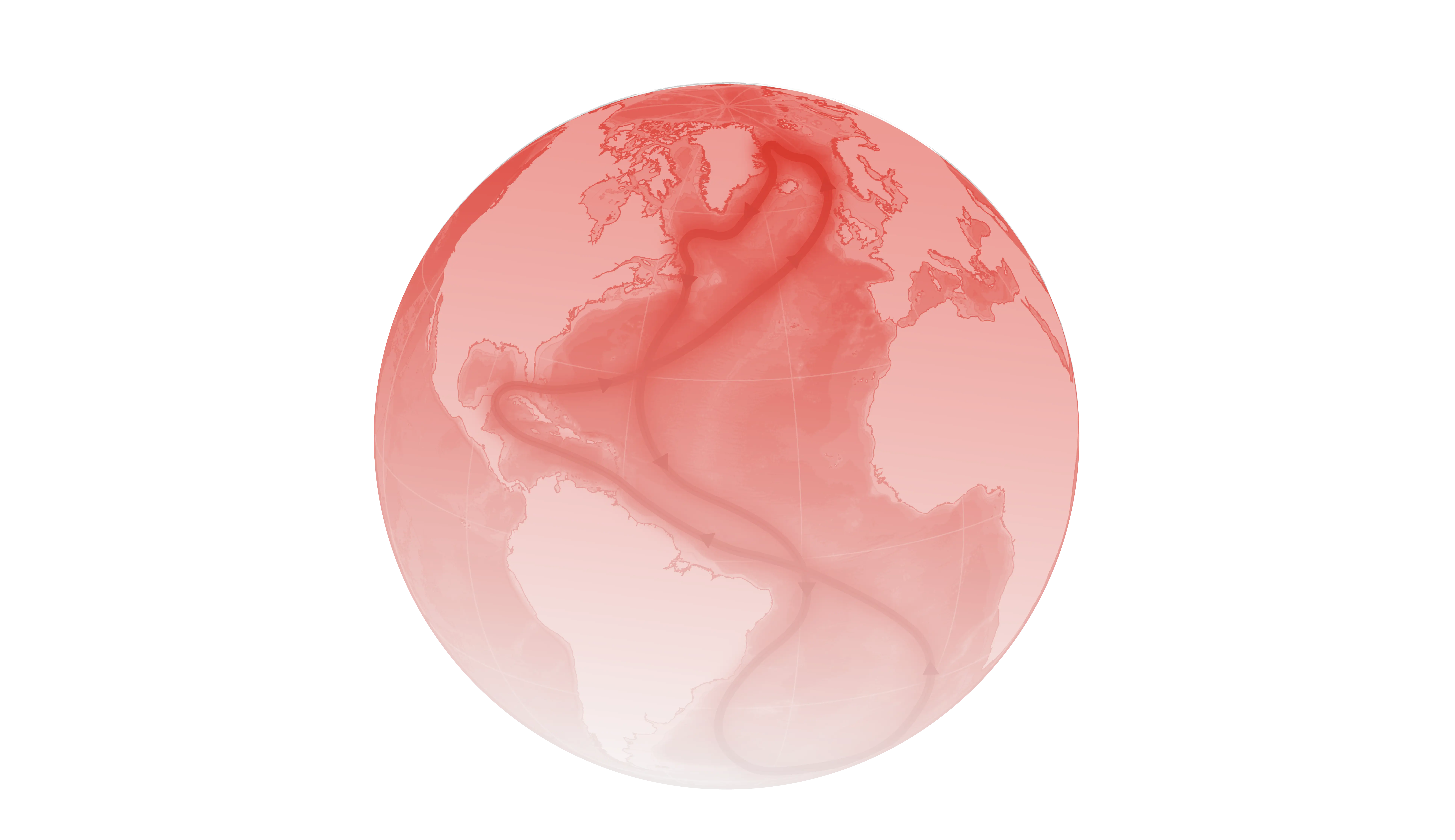
The Atlantic Meridional Overturning Circulation (AMOC) is a vast system of ocean currents that helps to distribute heat around the world.
By transporting warm water from the tropics northwards and cold water back southwards, the AMOC keeps Europe warm and plays a role in controlling global rainfall.
It connects into an even larger network of ocean currents that continuously moves water, nutrients and carbon around the world.
Now, the AMOC is under threat from human-caused climate change, as warming seas, melting ice and increased rainfall upset the temperature and salt balance of the North Atlantic.
Scientists have warned that the ocean currents are slowing down – and could eventually become so frail that they no longer transport heat around the globe.
A growing body of research has suggested that, with enough warming, the AMOC could reach a “tipping point” and transition to a weak state for many centuries.
The Intergovernmental Panel on Climate Change (IPCC) has projected that the AMOC will decline over the course of the 21st century as the world warms.
However, whether – and when – currents might “collapse” remains a subject of debate.
The IPCC says a “collapse” before 2100 is unlikely.
However, some scientists have argued climate change could force the AMOC past a “point of no return” over the coming decades that could usher it towards a “shutdown” next century.
A major slowdown or “tipping” of the AMOC could have grave consequences for European temperatures, causing them to plunge – despite global warming.
It could also affect global food supply, sea level rise and global rainfall patterns, or even act as a catalyst that sets off a series of other catastrophic climate “tipping points”.
Below, Carbon Brief explains what the AMOC is and how it is being impacted by climate change.
The article also explores scientific debates around the future of the AMOC, including what the latest research says about the possibility and consequences of a collapse of the ocean currents.
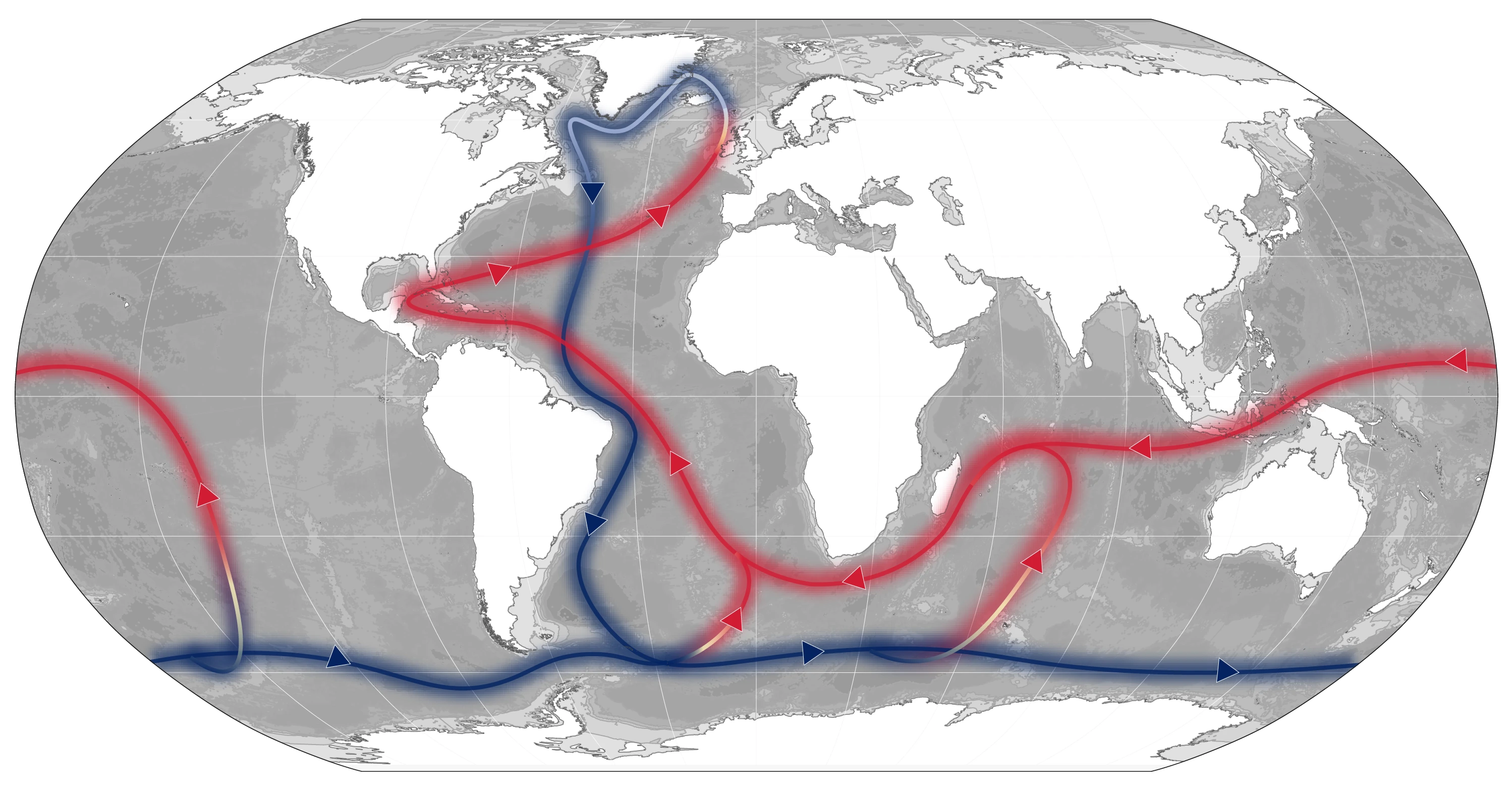
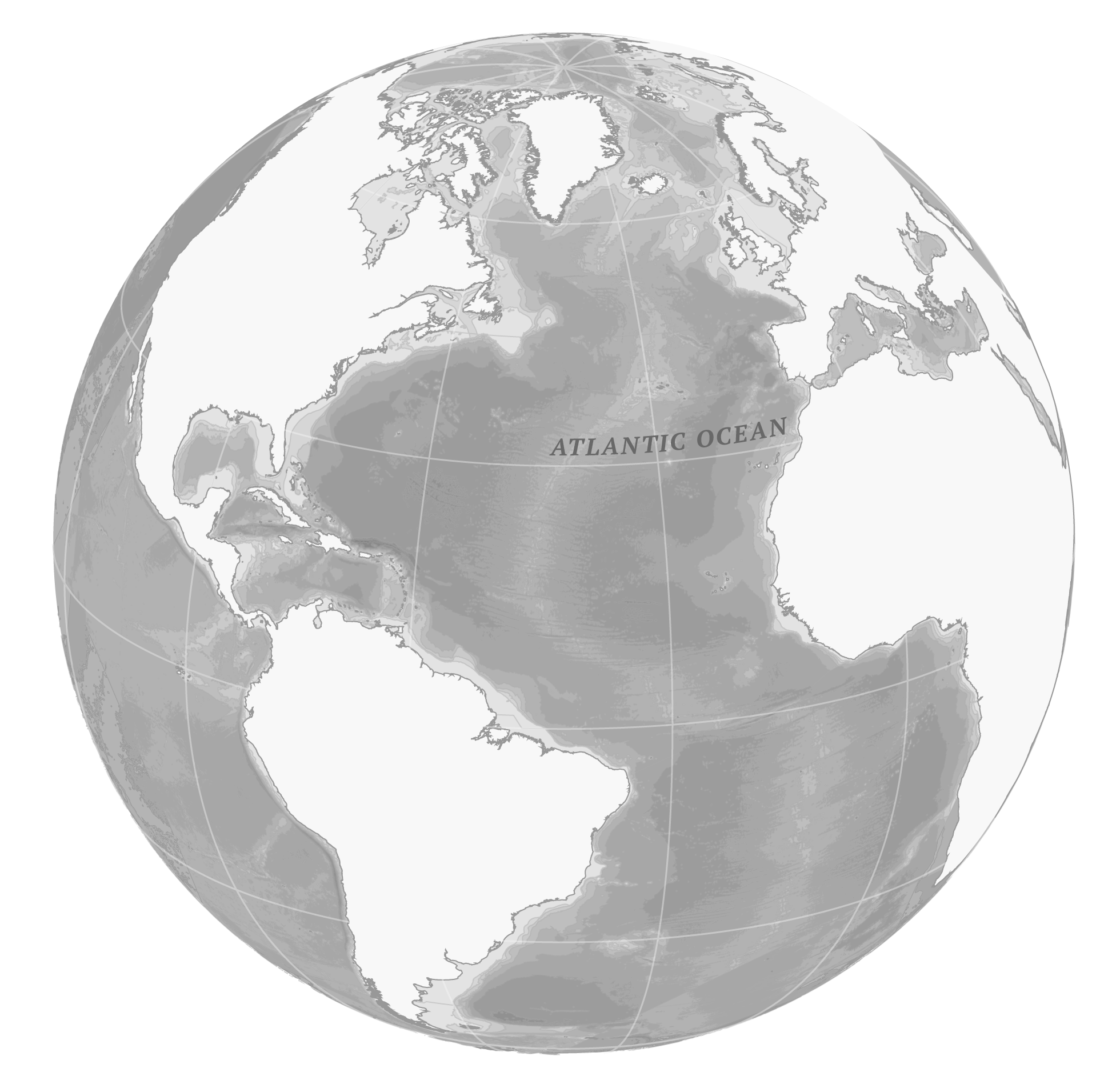
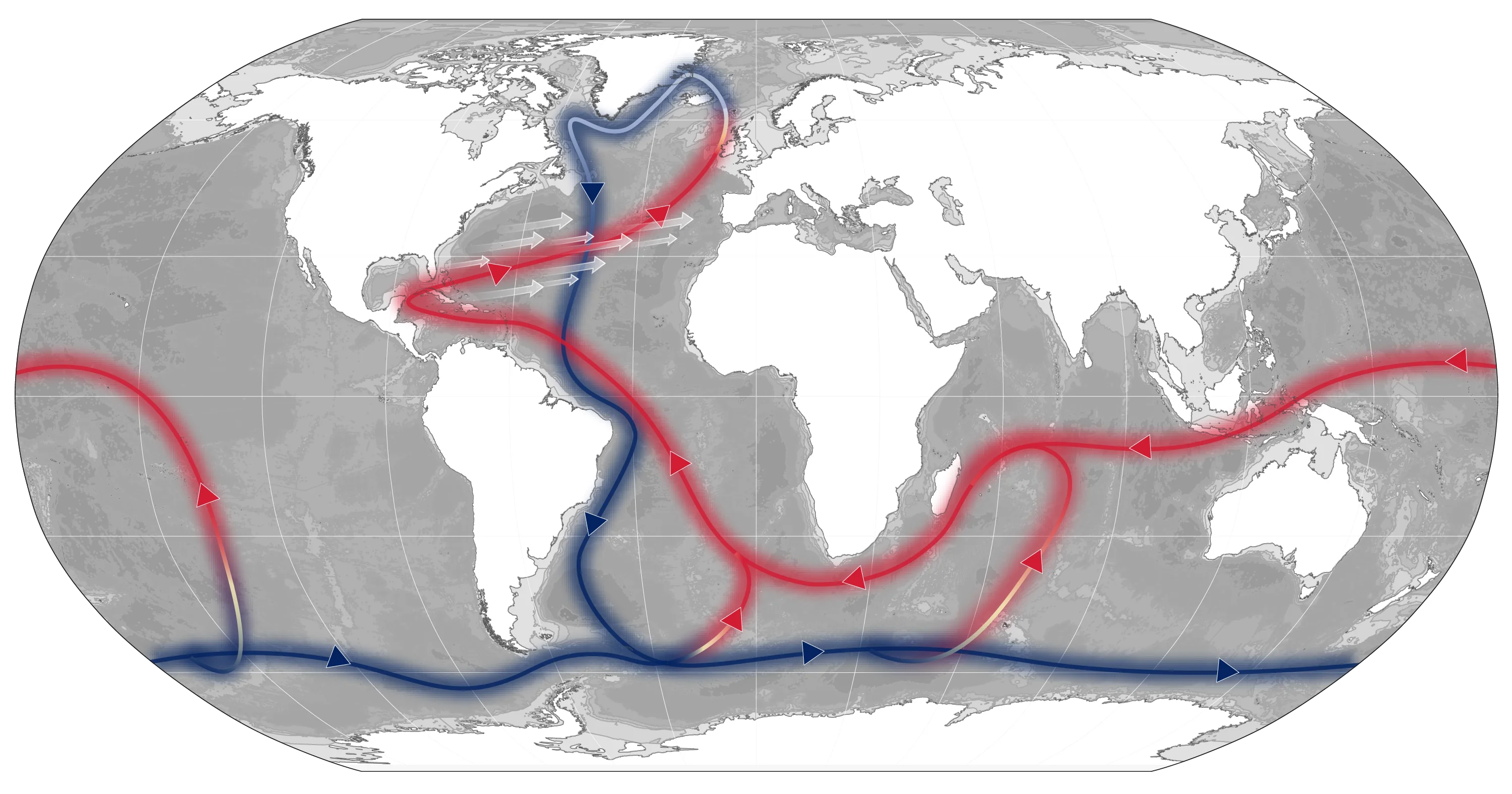
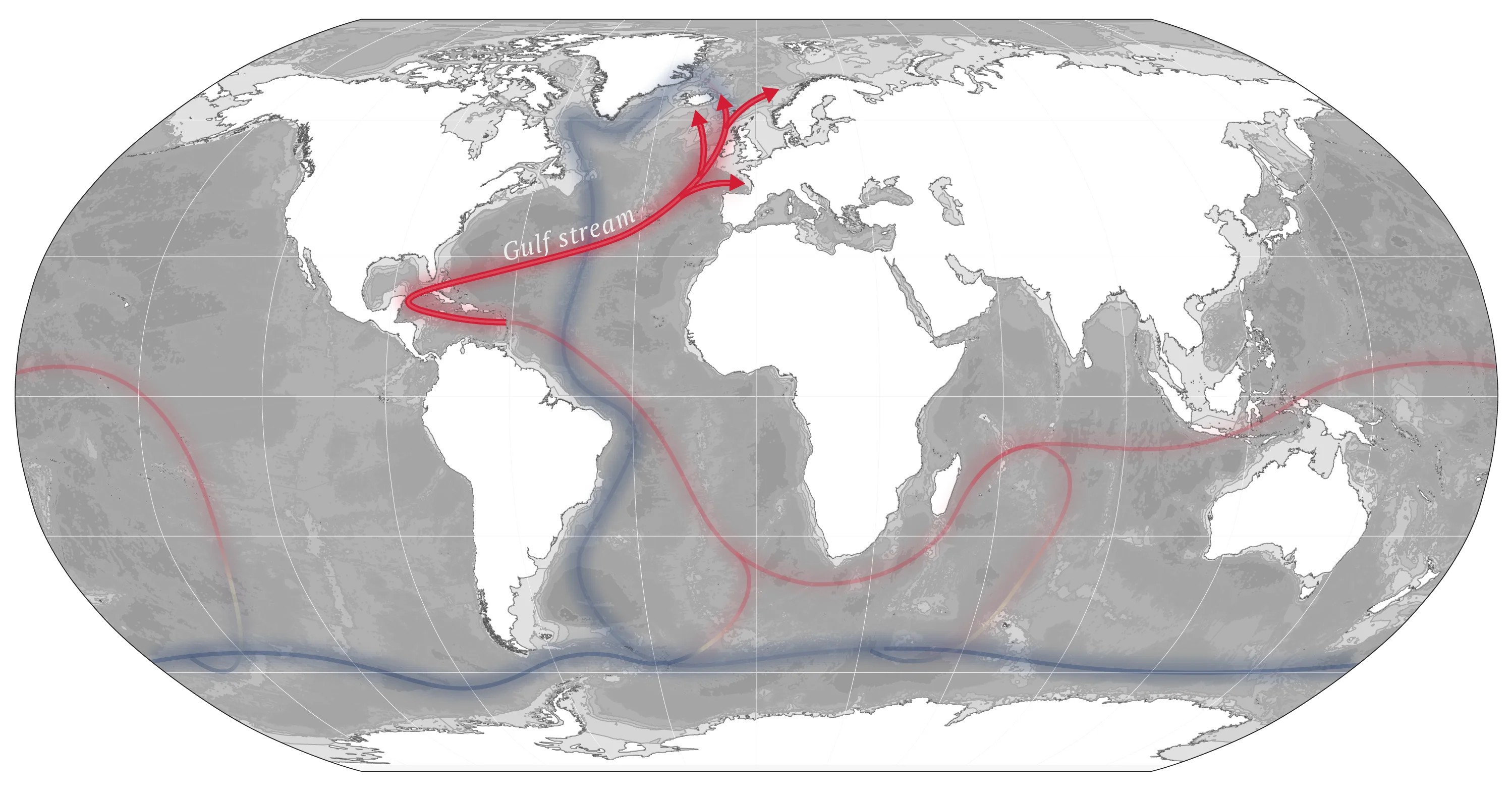

The AMOC does not only transport heat. It also plays a role in the transportation of nutrients that support marine ecosystems, as well as supporting the carbon cycle by transporting carbon-rich surface waters to the deep ocean.
Since the mid-20th century, oceanographers have warned that a warming climate could cause a slowdown of the AMOC, with far-reaching consequences for global weather patterns, humans, biodiversity and the carbon cycle. (For more, see: What are the projected impacts of AMOC collapse?)
The warming of the atmosphere due to the rise in greenhouse gases is causing an influx of freshwater into the North Atlantic from melting ice from Greenland.
Human-caused climate change has also been linked to an overall intensification of the global water cycle, meaning that more rainfall and more run-off from rivers ends up in the ocean.
Together, these factors are reducing the saltiness of water in the North Atlantic.
Sea surface temperatures are also rising with climate change.
When water is warmer and less salty, it sinks less easily. This hinders the “deep-water formation” – the process of cold water sinking – in the North Atlantic, slowing down the AMOC.
This has a compounding effect. As the AMOC slows down due to an overload of freshwater, it is able to transport less salty water northwards from the tropics – making the North Atlantic even more diluted. This is known as the salt-advection, or salinity-advection, feedback.
Against this backdrop, warmer air temperatures in the North Atlantic are reducing the ocean waters’ ability to shed heat at the surface and sink – further incapacitating the AMOC.
Experts have sounded the alarm that, with enough warming, the AMOC could weaken to a point where it is no longer able to transport heat and salt around the Atlantic.
A growing number of scientists believe the AMOC could eventually transition into a weak state from which it would not be able to return for centuries – even if warming were reversed.
This makes the AMOC an example of a climate “tipping” element – a part of the Earth’s system that has the potential to dramatically shift once pushed past a specific threshold by human-caused warming – often irreversibly.

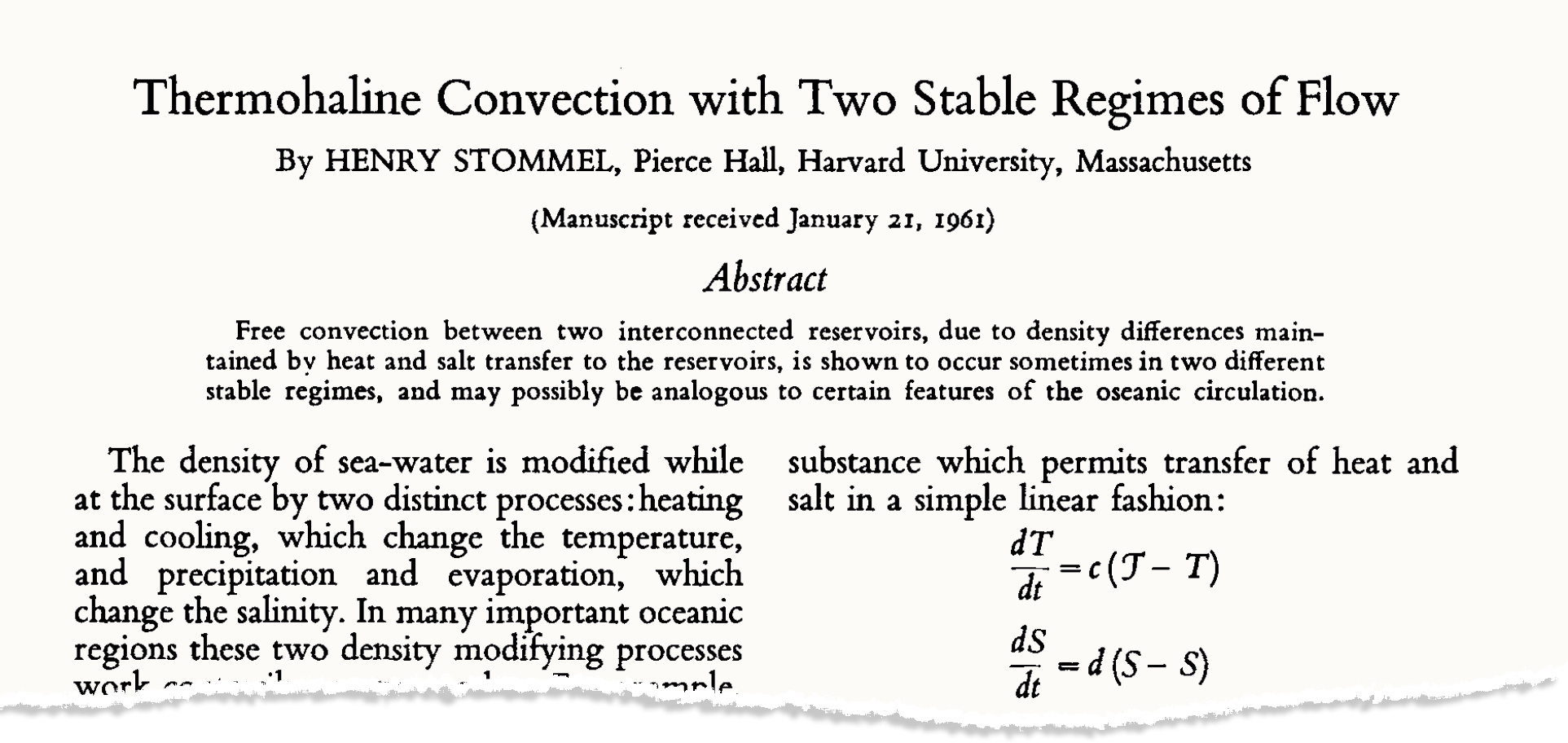
The bistability of the AMOC has been demonstrated in the years since Stommel’s model in modern climate models of increasing complexity.
A 2026 review study said the “evidence base in favour” of AMOC’s bistability had “broadened over the last years” – and concluded that the present-day AMOC was “in such a regime”.
There is broad consensus that evidence suggests the AMOC has exhibited bistable behaviour in previous ice ages – and that it has been slowing down under modern warming.
However, whether – and when – an AMOC “tipping point” could occur in a world warmed by greenhouse gases remains a live debate. (For more, see: How do scientists project future AMOC trends?)
Since the early 2000s, the strength of the AMOC has been estimated using vertical moorings installed at different locations of the Atlantic Ocean.
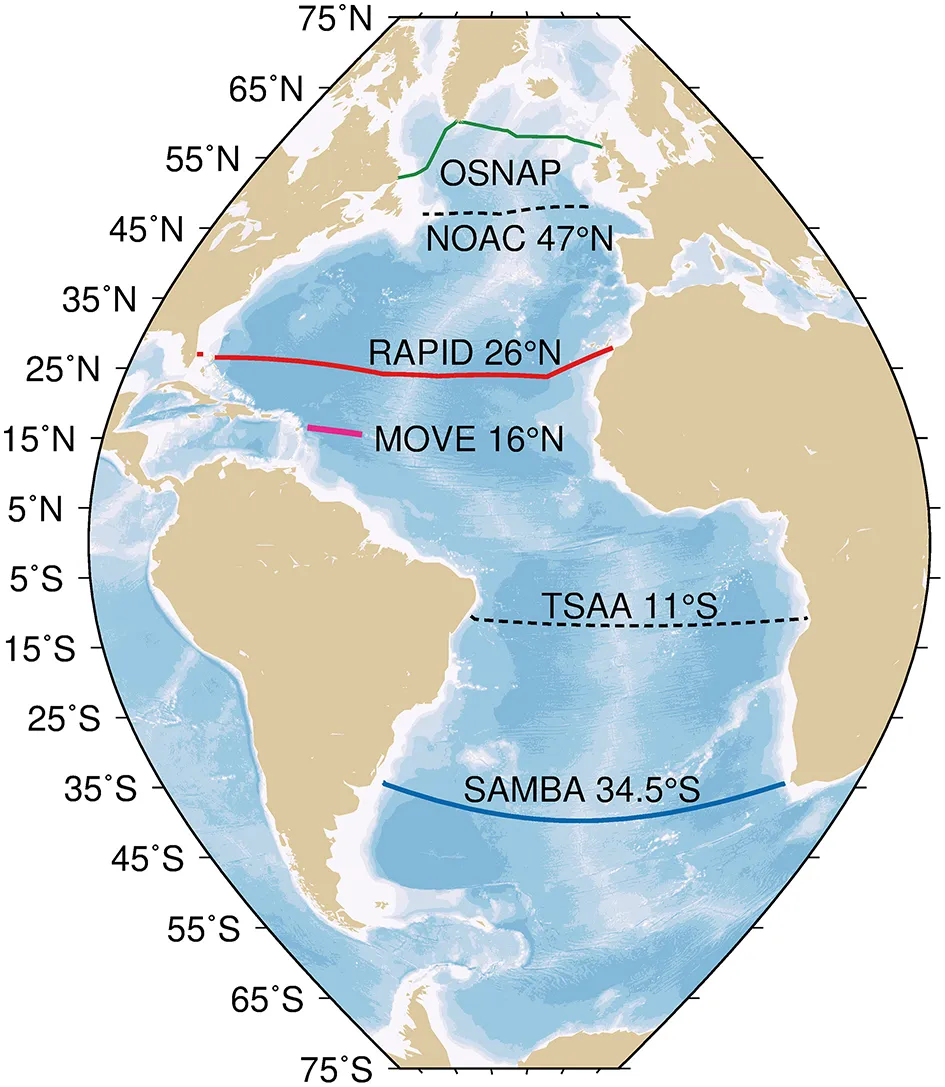
The oldest of these monitoring arrays is the RAPID observing system at a latitude of 26.5 degrees north. The array has collected continuous measurements in the mid-Atlantic and at its eastern and western boundaries – near the Bahamas and the Canary Islands – since 2004.
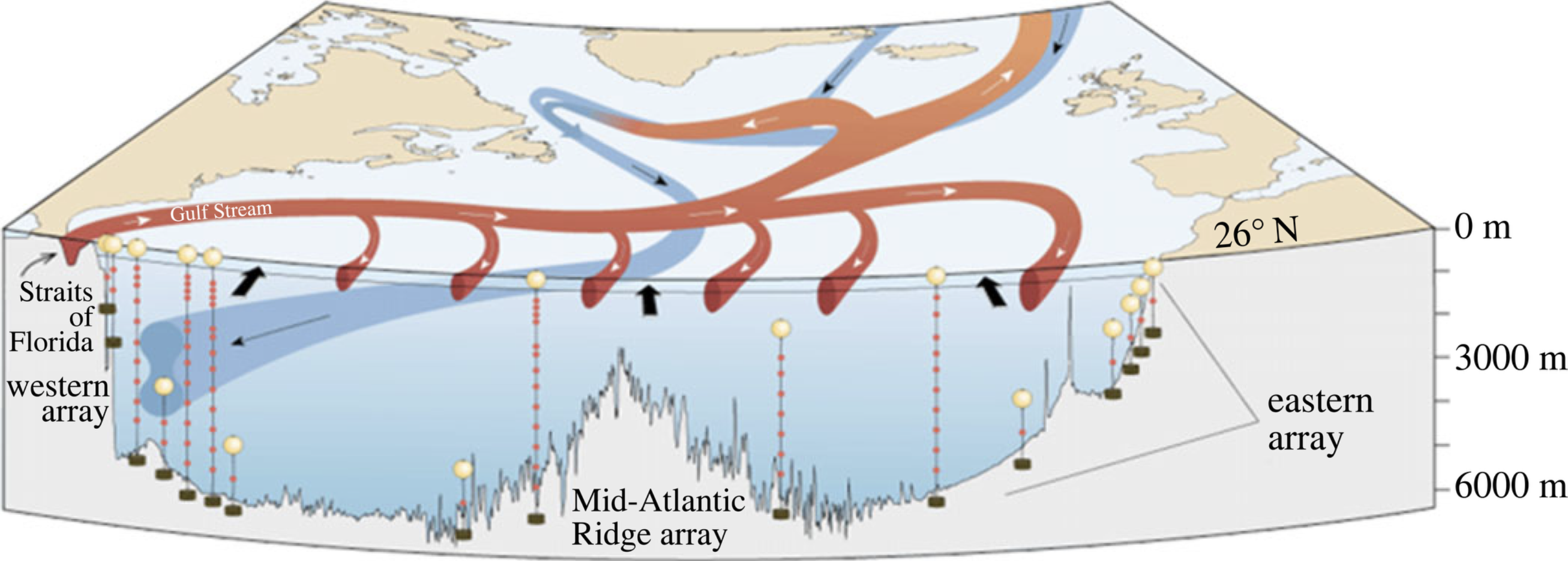
The sensors, which are bolted on to wires, stretch thousands of metres down to the ocean floor and collect measurements of water current, pressure, temperature and conductivity.
Dr Ben Moat, principal investigator of the UK National Oceanography Centre, which maintains the system, tells Carbon Brief that RAPID captures the heat transport of AMOC at its maximum strength:
“The heat that is moved northwards between Florida and the Canary Islands is 1.2 petawatts (PW) of heat – that is equivalent to a million power stations. RAPID was designed specifically to be close to the maximum of that heat transport.”
To get an overall picture of the strength of AMOC, scientists combine RAPID observations with wind observations and measurements of the Gulf Stream captured by an electromagnetic cable in the Florida Straits maintained by the US National Oceanic and Atmospheric Administration (NOAA).
Moat says the RAPID project has “completely revolutionised” scientific understanding of how heat is moved around the Atlantic:
“Until RAPID there was little understanding of how the [AMOC] varied and how it is changing over time.
“Then, along came RAPID and the first results were astounding. Not only did this heat transport vary on daily time scales, it moved on hourly to daily to monthly [time scales]. Now, we are seeing seasonal, inter-year and decadal changes.”
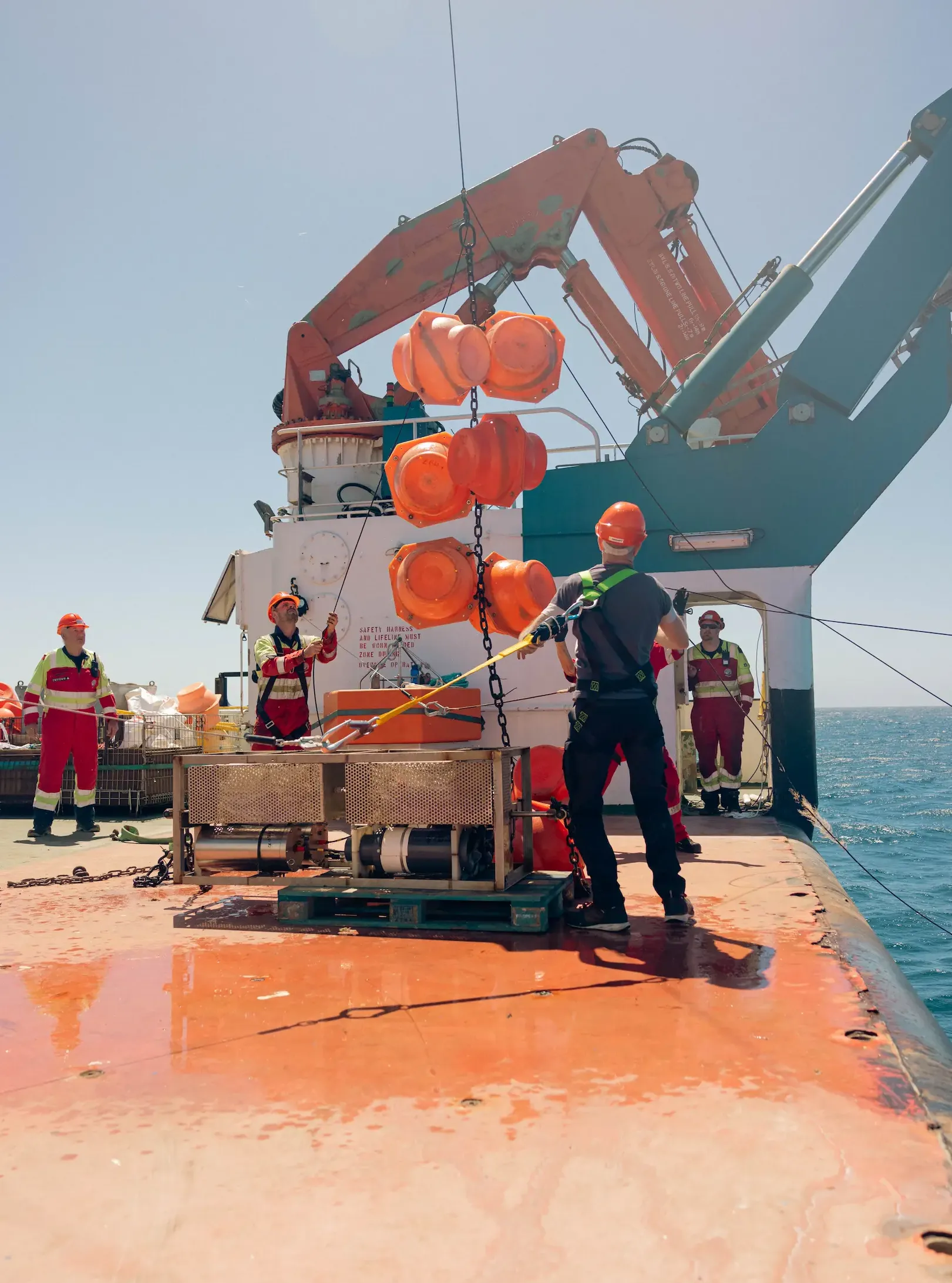
There are now a number of other sensor arrays that help scientists measure the health of AMOC moored in the Atlantic. This includes the OSNAP subpolar array, which has been collecting hourly measurements from the northern boundary of the Atlantic since 2014, as well as the South Atlantic meridional overturning circulation basin-wide array (SAMBA) at 34.5 degrees south, which has been in operation since 2009.
The map below shows the different trans-Atlantic mooring arrays that monitor the AMOC.
The strength of AMOC is measured in sverdrups (Sv), where one unit represents the transport of one million cubic metres of water per second.
The plot below charts observations captured by the RAPID array since 2004.
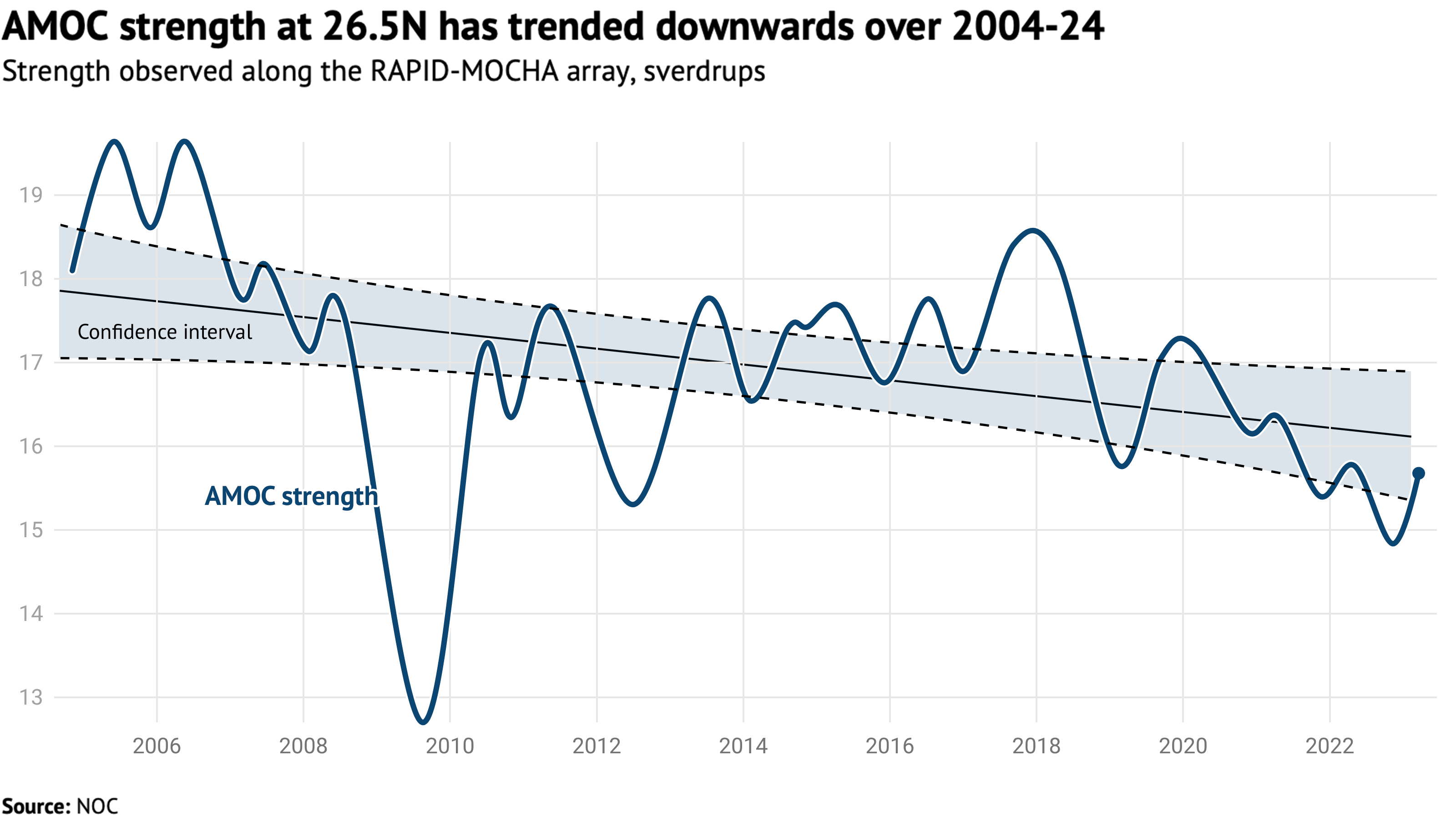
A 2023 review paper which analysed 20 years of RAPID measurements found that average AMOC strength annually was in the range of 15-17Sv between 2011 and 2020, down from 18-19Sv over 2004-08.
In other words, the ocean conveyor belt transported, on average, 2-3m cubic metres less water every second over 2011-20 compared to 2004-08.
However, it notes that the observational record is “still too short” to disentangle the fingerprint of climate change from decade-to-decade natural climate variability.
For example, the paper attributes a steep decline in AMOC strength over 2007-11 – of 0.6Sv each year – to “wind or buoyancy forcing over the North Atlantic rather than anthropogenically forced [human-caused] change”.
It notes that most of the year-on-year variability over this period can be “reproduced by relatively simple wind-forced models – suggesting that the 2009-10 event may have been primarily a wind-forced response”.
A 2025 Geophysical Research Letters paper which looked at RAPID measurements over 2004-23 noted that the AMOC has weakened by roughly 1Sv per decade, across a range of 0.4-1.6Sv.
This downtrend, it said, is “close” to the pace of decline through to 2100 projected by climate models. (For more on models, see: How do scientists project future AMOC trends?)
Scientists will have to wait until at least 2033 – when there will be 29 years of RAPID data – to be able to confidently disentangle the role human-caused climate change is having on the AMOC, according to 2020 Geophysical Research Letters research.
The table below – from the 2023 review – shows average estimates of AMOC strength captured at four trans-Atlantic monitoring arrays (OSNAP, RAPID, MOVE and SAMBA).
It shows how average AMOC strength at 26.5 degrees north – of 16.9Sv – is broadly consistent with those captured at other arrays, which range from 16.7-17.3Sv.
| Latitude | Array name | Time period | AMOC strength (Sv) |
|---|---|---|---|
| 34.5S | SAMBA | 2013-17 | 17.3 ± 5.0 |
| 16N | MOVE | 2000-19 | 17.3 ± 1.4 |
| 26.5N | RAPID | 2004-20 | 16.9 ± 1.2 |
| 59N (approx) | OSNAP | 2014-20 | 16.7 ± 0.6 |
Determining variations in the strength of AMOC prior to 2004 is more complicated due to the lack of a direct observational record.
Prior to the installation of the RAPID array, direct measurements of the AMOC were limited to a handful of one-off, “snapshot” AMOC observations collected by sensors dropped off research ships.
To gauge changes to AMOC’s strength over a longer period, scientists use indirect ocean observations.
These include ocean temperature and salinity observations, as well as satellite observations of sea surface height.
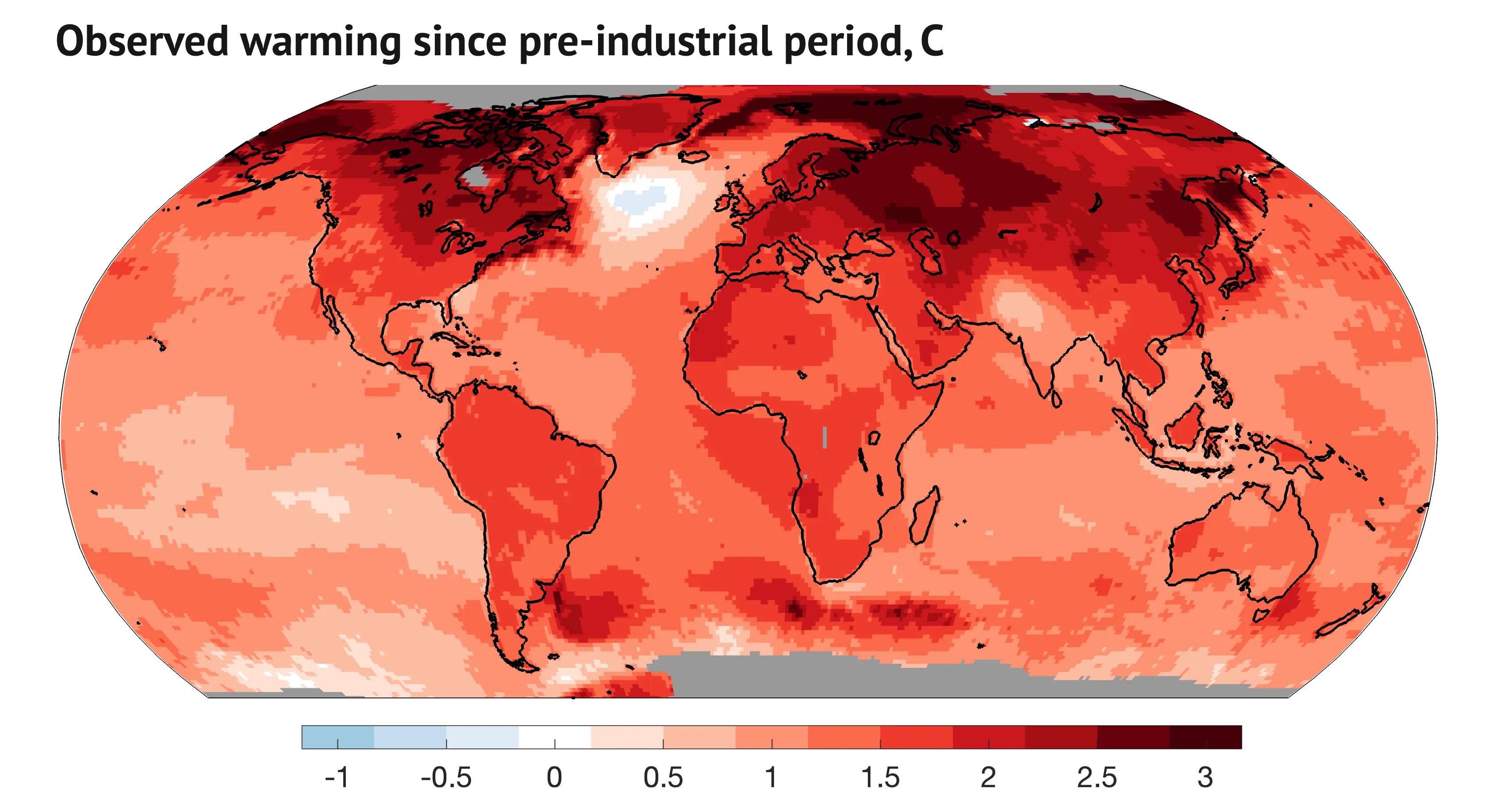
For example, the existence of the “cold blob” or warming “hole” in the sub-polar gyre region of the North Atlantic has been cited as evidence of a slowdown of the AMOC. This region – the place where the AMOC delivers much of its heat – has cooled as the world has warmed.
This is shown by the map below, where red indicates places which have warmed since the pre-industrial period and blue shows places that have cooled.
(For more on the human causes of the cold blob, see Carbon Brief’s coverage of a 2020 study in Nature Climate Change.)
To trace changes to the AMOC before satellite and sea surface temperature records began, scientists use proxy records held in marine “archives”, such as coral and ocean sediments.
For example, a 2021 Nature Geoscience paper compared a “variety of proxy records”, including deep-sea sediments and ocean temperature patterns, to reconstruct changes to the AMOC since AD400. It found that the ocean currents during the mid-20th century were at their weakest in one thousand years.
Going back even further in time, scientists have used ice cores and ocean sediment to link oscillations of the Earth’s climate during ice ages to the AMOC. This body of research has suggested that Atlantic ocean currents weakened during cold phases and recovered ahead of relatively warmer periods, in cycles lasting from 1,000 to 100,000 years.
The conclusions that have been inferred from indirect datasets can vary widely, given incomplete data and a diversity of approaches to defining an AMOC indicator.
Scientists also use climate models to run “hindcasts” that simulate how the ocean might have behaved in the past. Hindcasts are model runs exploring the recent historical period that allow scientists to understand how well simulations cleave to observations.
However, there are limitations to how well models can replicate changes to ocean patterns. (For more on climate models and AMOC, see: How do scientists project future AMOC trends?)
The Coupled Modelled Intercomparison Project 5 (CMIP5) models developed for the IPCC’s fifth assessment cycle (AR5) indicated a slowdown of the AMOC over the 20th century. In contrast, the CMIP6 models developed for the IPCC’s sixth assessment cycle (AR6) indicated an increase in AMOC strength over the course of the 100-year period.
The IPCC has updated its assessment of 20th-century AMOC behaviour a number of times.
The 2013 Working Group I (WG1) report of AR5 concluded there was “no observational evidence” of a long-term AMOC decline, based on the then-decade long “record of the complete AMOC” and “longer records of individual AMOC components”.
Six years later, the 2019 special report on ocean and cryosphere stated with “medium confidence” that the AMOC had weakened relative to 1850-1900. However, it noted that data was “insufficient” to quantify that weakening or to attribute it to human-caused climate change.
More recently, the 2021 WG1 report of AR6 noted that its confidence levels in “reconstructed and modelled AMOC changes” had decreased. It stated that it had “low confidence” in the weakening of AMOC in the 20th century.
Thus, while direct observations reveal a weakening of AMOC over the last two decades, incomplete data means the picture before the 21st century is less certain.
The term “collapse” is used in different ways in the scientific literature about AMOC.
An AMOC that is no longer able to transport heat around the planet is often referred to as being “collapsed”, “shutdown” or as being in an “off” state.
Other research uses the term ”collapse” to describe the juncture where AMOC has “tipped” – in other words, started an almost-irreversible transition towards an extremely weak state. This is also sometimes described as the “start of collapse” or “AMOC collapse onset”.
The transition of AMOC from the moment of its “tipping” to its stabilisation in a new, weak state would take somewhere up to, or even more than, 100 years, according to recent modelling studies.
Meanwhile, in climate modelling, a collapsed AMOC is typically one that has stabilised at a weak state of between, or below, 3-6Sv – roughly one-fifth to one-third of the strength of AMOC over 2011-20. In these modelled worlds, the AMOC may, or may not, be able to return to a stronger state if warming was reserved.
Prof Stefan Rahmstorf from the Potsdam Institute for Climate Impact Research (PIK) explains that 6Sv is a “common threshold” that researchers use in model runs for a collapsed AMOC. At this strength, he says, the AMOC has just “weak, shallow overturning” and “hardly any influence on heat transport or climate”.
His colleague Prof Niklas Boers at PIK says the definition of AMOC “collapse” is a “matter of convention”. The common characterisation of a collapsed AMOC as one that has stabilised below a certain strength threshold – “regardless of whether it is reversible or not” – is “fair”, he says.
However, Boers notes that this definition does not answer the “practically relevant” question of whether the “AMOC is tipping – in the sense of, can it come back or not?”
Dr René van Westen, a researcher at Utrecht University, says that measuring AMOC in terms of strength in sverdrups does not provide a full picture of AMOC’s ability to redistribute heat. Heat transport around the Atlantic could start to break down well above a 6Sv threshold, he explains:
“AMOC strength is the most compelling [characteristic] because it is very easy to communicate. But it can sometimes give you a mixed view [on AMOC collapse]. There will be instances where you get a shallow residual AMOC that can be above this arbitrary [6Sv] threshold.”
Other variables to look out for when assessing AMOC’s health, according to van Westen, include patterns of oceanic heat transport across Atlantic Ocean latitudes and the presence of “sinking and deep water mass transformation” in the North Atlantic.
To explore how the AMOC might behave in the future – and what the impacts of it might be – scientists turn to climate models.
Climate models have long predicted an AMOC slowdown in response to global warming. However, model projections of the future health of the AMOC vary widely.
In AR6, the IPCC said the AMOC will “very likely decline” over the 21st century across all shared socioeconomic pathway (SSP) scenarios.
(For more on the scenarios themselves, see Carbon Brief’s explainer.)
The IPCC’s projections suggest that in a low-emissions scenario, the AMOC will weaken by about 24% (with a range of 4-46%) by the year 2100, depending on the model. It projects a reduction of 39% (with a range of 17-55%) in a very high-emissions scenario.
An analysis of a “majority cluster” of CMIP6 model projections in a 2020 paper found that, on average, the AMOC could weaken by 34% in a low-emissions scenario and 45% in a very high-emissions scenario by the century’s end, equivalent to a 6-8 Sv decline at the RAPID array.
(When the analysis was not limited to this group of models, the paper projected a decline of 24% in a low-emissions scenario, 29% in a medium-emissions scenario, 32% in a high-emissions scenario and 39% in a very high-emissions scenario by 2100.)
In a 2026 Science Advances paper, researchers attempted to refine estimates of the AMOC’s future behaviour by incorporating real-world observations into model projections. The research found that – once these “observational constraints” are taken into account – model projections show the AMOC could slow down by 51% by 2100 in a medium-emissions scenario.
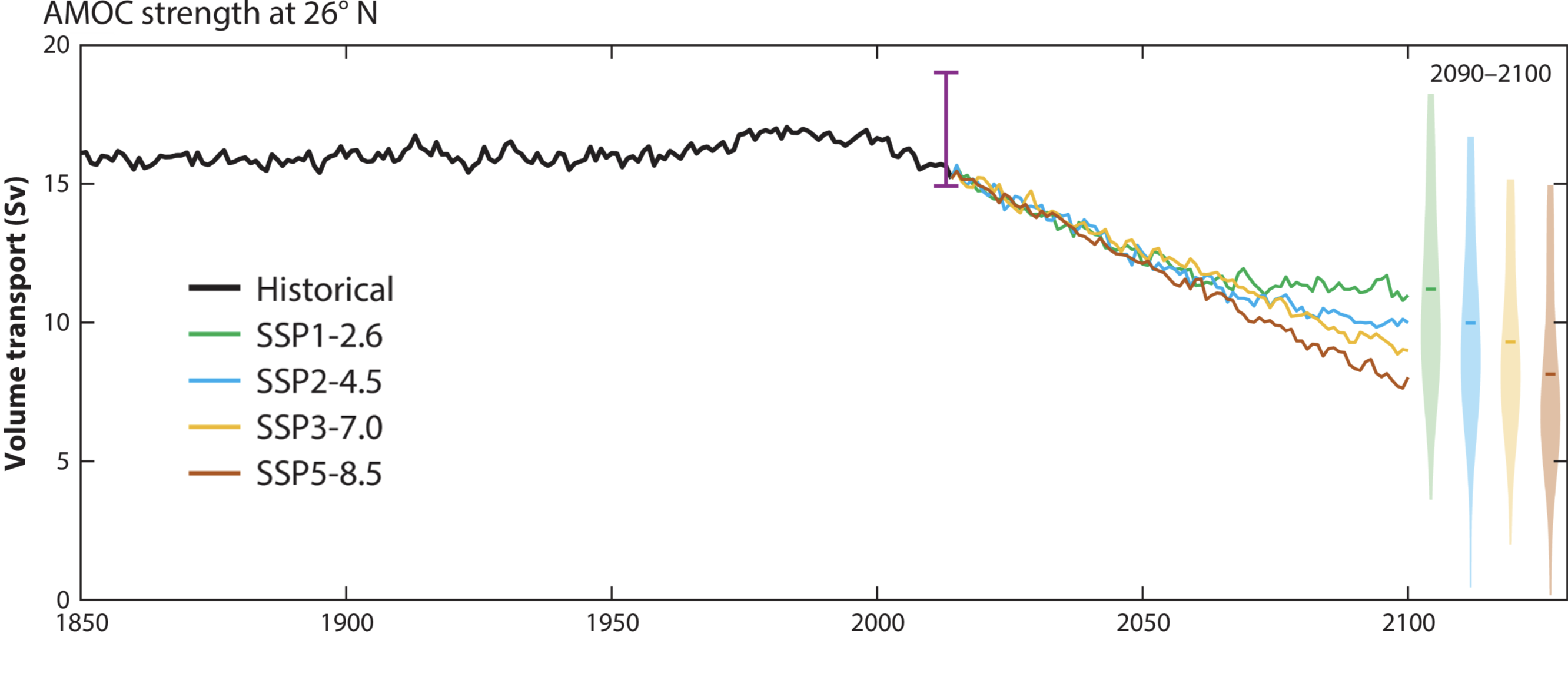
The line chart below, from a 2026 review paper, illustrates CMIP6 model projections for AMOC’s health over 1850-2100. The black line indicates the maximum strength observed at 26 degrees north and the colourful lines indicate average projections under different emissions pathways from 2014 onwards.
The violin plots on the right shows the spread of AMOC strength outcomes projected by the end of the 21st century under different emissions pathways, as projected by CMIP6 models.
A substantial body of research has found that IPCC models lean towards unrealistic levels of stability in the AMOC. This has been backed up by hindcasts.
The IPCC acknowledges the limitations of current tools for projecting the future health of AMOC. In AR6, it stated that – despite having “high confidence” in future AMOC weakening as a “qualitative feature” based on “process understanding” – it has “low confidence” in “quantitative projections” of AMOC decline in the 21st century.
Dr Laura Jackson from the UK Met Office explains why the AMOC is difficult to model:
“The AMOC is not a specific thing – it is the impact of lots of different currents. It is affected by processes happening at small scales, like mixing and eddies which affect how the heat and salt are distributed. We can’t resolve many of these with climate models.”
Common issues with models, according to the 2026 review, are a “too-shallow AMOC pattern, a too-strong recirculation in the upper mid-ocean, a too-weak meridional heat transport and an underestimation of interannual and decadal variability”.
A limitation in IPCC models is that they do not incorporate the impacts of freshwater being added to the north Atlantic as the Greenland ice sheet melts.
To address this limitation, researchers adjust climate models to add levels of freshwater input to the north Atlantic for a fixed length of time. This is known as “hosing”.
To investigate models’ sensitivity to an influx of freshwater in the North Atlantic, six global modelling groups ran a series of “hosing experiments” with eight CMIP6 models (from six modelling centres) as part of the North Atlantic Hosing Model Intercomparison Project.
In findings published in 2023, the researchers noted that half the models tested in the experiment “recovered” after “hosing of 0.3Sv”, whereas the remainder “remained in a weakened state”.
The study explained that the model runs explored are “unrealistic” and not future climate scenarios. However, it said that analysis of the similarities and differences between model responses helps scientists “understand what controls…AMOC response and how the real world may behave”.
Given the limitations of models, in recent years scientists have turned to other methods to understand the future behaviour of the AMOC, including “early-warning signal” studies.
Early-warning signal studies look for other factors in the historical record and model runs that provide an indicator for whether the AMOC is approaching a tipping point.
These can be “statistical indicators” – patterns in data timeseries, such as sea surface temperature or ocean salt content.
They can also be “physics-based indicators”, which are physical processes tied to AMOC stability. These mechanisms are linked to the dynamics of the ocean, such as water buoyancy and freshwater transport.
An example of a study that looked at statistical indicators is a 2021 Nature study that analysed four temperature and four salinity data series linked to AMOC strength. It concluded there was “strong evidence that the AMOC is indeed approaching a critical, bifurcation-induced transition”.
(When a system undergoes a “bifurcation” – which means to divide into two branches – it is subsequently difficult, if not impossible, for the system to revert to its previous state.)
A 2023 Nature Communications paper analysed sea surface temperature in the sub-polar gyre region to make a headline-grabbing prediction of a “forthcoming collapse” of the AMOC. The paper projects that AMOC “collapse” could “occur” between 2037 and 2109 – and most likely around the middle of this century.
Meanwhile, a 2024 Science Advances study said it had identified a new “physics-based early-warning signal” that showed AMOC is “on route to tipping”. The indicator used related to the minimum amount of freshwater transported by AMOC at the southern boundary of the Atlantic.
A 2026 Communications Earth & Environment paper identified “abrupt” changes to the path of the Gulf Stream as an “early-warning indicator” of an AMOC “collapse” or “tipping”.
PIK’s Rahmstorf says that debate remains about the usefulness of studies which look for signs that indicate the collapse of the AMOC. Scientists are still looking for “better, more reliable and observable” warning signals, he says, explaining:
“We are never going to get a [fully] reliable ‘early warning’ because the uncertainties around the data availability are just too large. That was already my feeling in the early 2000s when this kind of work started. I thought that, theoretically, this is nice – if only we had the data. But, the problem is, we don’t have 100 years of accurate AMOC data.”
His colleague Boers says that early-warning studies can help scientists interpret whether a system is moving towards a tipping point, but should not be used to make timing predictions:
“The AMOC’s stability has declined. It has moved closer towards a possible tipping point. But we cannot say when that might happen. Even if we knew the exact evolution of future temperatures, then there’s still way too many other uncertainties to make any meaningful prediction of the time at which this could happen.
“So, early warning in terms of a prediction? No way. It just doesn’t work.”
In AR6, the IPCC notes it has “medium confidence” that the decline of AMOC will not involve an “abrupt collapse” before 2100. (An “abrupt” change in IPCC lingo is an event taking place in three decades or less.)
The IPCC’s findings were backed up by a 2025 Nature study that examined the future stability of the AMOC in 34 climate models adjusted to simulate varying levels of greenhouse gas emissions and freshwater input.
The researchers found that an AMOC collapse – defined in a correction notice as a “weakening to below 6Sv” – was “unlikely” this century, noting that, “in all cases”, the ocean circulation was sustained “by upwelling in the Southern Ocean, driven by persistent Southern Ocean winds”.
(The paper in question prompted some debate around how scientists define AMOC “collapse” by 2100.)
Meanwhile, research published in Nature Geoscience in 2025 found that AMOC would experience “limited weakening” of 18-43% – or 3-6Sv – by 2100, even in a very-high emissions scenario. As such, it said an “AMOC collapse during the 21st century was unlikely”.
To reach this conclusion, the scientists refined existing climate model projections by developing a model based on ocean physics which took into account the relationship between water density and the AMOC’s depth. They also incorporated real-world measurements, including from the RAPID array.
However, a number of recent papers have argued that the risk of AMOC collapse has been underestimated.
For example, a study published in Environmental Research Letters in 2025 explored the future health of AMOC by running a number of IPCC climate models beyond their typical 2100 cut-off. It found that an AMOC shutdown would occur after 2100 in 67% of all runs in a very high-emissions scenario, 30% of all runs under a medium-emissions scenario and 25% in a low-emissions scenario.
The “precursor” to a “weak and shallow AMOC” after 2100 is the collapse of “maximum mixed-layer depth” in the North Atlantic in the middle of this century, according to the study.
The researchers said that “such numbers…no longer comply with the low-likelihood, high-impact event that is used to discuss an abrupt AMOC collapse in AR6 and this assessment needs to be revised in [the IPCC’s upcoming seventh assessment report]”.
(It is worth underlining that the IPCC’s discussion of potential AMOC collapse is in the context of the 21st century, whereas the Environmental Research Letters study explores potential outcomes post-2100.)
Another recent study, published in JGR Oceans in 2025, found that the AMOC could “begin to collapse” as soon as 2063 under a medium-emissions scenario.
The researchers determined that AMOC is on a tipping course once a threshold – a “physics-based indicator” – related to water sinking is crossed. After analysing when this trigger point occurred in various model runs, they pinned the “AMOC tipping threshold” at around 2.5C of global warming above the pre-industrial average.
The research noted that a “previous critical temperature threshold of 4C warming for AMOC tipping” – set out in a 2022 Science paper – “should be revised”.
Van Westen – who was involved in both the JGR Oceans and Environmental Research Letters studies – highlights that both papers identify a threshold likely to be crossed in the 21st century that would mark a “point of no return” for the AMOC. He says:
“The most interesting AMOC dynamics happen after 2100, but most [climate model] simulations are terminated at 2100 because it is computationally too expensive [to run them].
“[Our research shows] that many [simulations to 2100] have already reached a critical value where AMOC has started to tip – a process that could then take 100 years. In those, the [simulated] AMOC might be at 12Sv by 2100, but actually it is already collapsing.”
An AMOC shutdown would transform weather patterns, with drastic consequences for Europe, the Amazon rainforest and food systems.
In AR6, the IPCC summarised the potential effects of an AMOC collapse as follows:
“If an AMOC collapse were to occur, it would very likely cause abrupt shifts in the regional weather patterns and water cycle, such as a southward shift in the tropical rain belt, and could result in weakening of the African and Asian monsoons, strengthening of southern hemisphere monsoons and drying in Europe.”
A 2025 study in Geophysical Research Letters looked at the combined effects of global warming and a full AMOC collapse on Europe. (For more, read Carbon Brief’s in-depth coverage of the research.)
The study found that, in a medium-emissions scenario, greenhouse gas-driven warming would not be able to outweigh the cooling impact of an AMOC shutdown. In this modelled world, cold extremes could approach -20C in London and -48C in Oslo.
The cold temperatures in north-west Europe would be driven by the loss of heat transfer from the tropics via ocean currents, as well as the encroachment of sea ice across northern Europe in winter, the study noted.
Separate research published in 2025 in Hydrology and Earth System Sciences found that an AMOC collapse under a medium-emissions scenario would lead to increasing drought in southern Europe.
The impacts of a shutdown of AMOC on the global south is a growing area of research. There is evidence that the shutdown of the ocean currents could lead to a major rearranging of global monsoon systems in regions where more than half of the world’s population live – and increased drought in the Sahel.
A 2024 Science Advances study found that – in a modelled world without global warming, but a full AMOC collapse – the Amazon rainforest would see a “drastic change” in rainfall patterns with the “dry season set to become the wet season and vice-versa”.
Several studies have shown that sea levels on the east coast of the US will rise more quickly if the AMOC weakens. A 2015 Nature study pointed to a 30% downturn of the AMOC over 2009-10 as one of two factors for an “unprecedented” 128mm jump in sea level north of New York City over the two-year period.
Other research has explored the impact of a collapse of AMOC on food supplies. For instance, a 2020 study in Nature Food found that the collapse of the ocean currents could result in the “widespread cessation of arable farming” in the UK and “losses of agricultural output…an order of magnitude larger than the impacts of climate change without an AMOC collapse”.
Meanwhile, other scientists have warned that damage to the mechanism which allows the ocean to store carbon could lead to more CO2 collecting in the atmosphere.
A 2026 paper, published in Communications Earth & Environment, found that AMOC collapse – defined as a “rapid weakening to a nearly complete shutdown with a maximum strength below 5Sv” – would increase atmospheric carbon dioxide by 47-83 parts per million (ppm).
This, the researchers said, would lead to around 0.2C of additional warming, once “ocean-dynamics-driven cooling” was taken into account. (To reach their conclusions, the researchers ran experiments using a fast Earth system model, exploring scenarios where baseline CO2 levels ranged between 350-600ppm.)
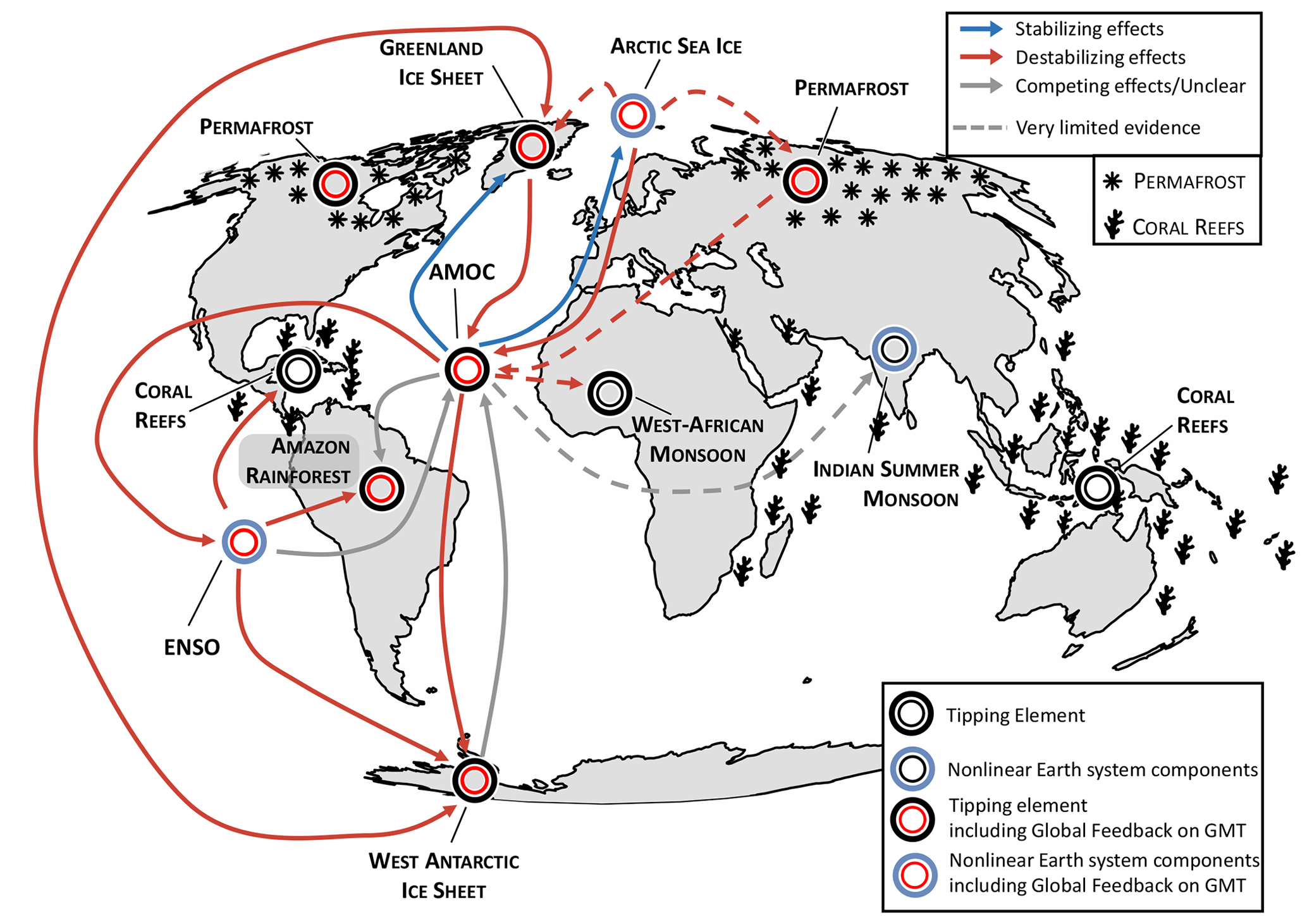
Scientists have noted that the shutdown of the AMOC could have a “cascading” effect on other critical Earth systems, which are themselves at risk of tipping.
Prof Nico Wunderling, a scientist at PIK’s Earth Resilience Science Unit, explains that the AMOC is the “strongest interactor across all of the climate tipping elements” because it links the cryosphere – the portions of Earth where water is in solid form – to the ocean, atmosphere and biosphere. He tells Carbon Brief:
“When the AMOC changes, it changes not only ocean temperatures, which then act on the cryosphere [the Greenland ice sheet, the West Antarctic ice sheet, permafrost and Arctic and Antarctic sea ice], but it changes atmospheric patterns, such as the Intertropical Convergence Zone [a band of low pressure around the Earth which generally lies near to the equator] and other winds in the global climate system. That means rainfall patterns change, which then impacts biosphere [tipping] elements such as the Amazon rainforest.”
The map below shows how the collapse of the AMOC could end up destabilising a number of the Earth’s tipping elements, including the West Antarctic ice sheet and the Amazon rainforest. The red arrows illustrate destabilising effects between different tipping elements.
The AMOC is receiving increasing media attention around the world.
Carbon Brief analysis reveals how the number of news articles to mention “Atlantic Meridional Overturning Circulation” has grown over the past 20 years, from 14 in 2006 to 1,033 in 2024. This is shown in the chart below.
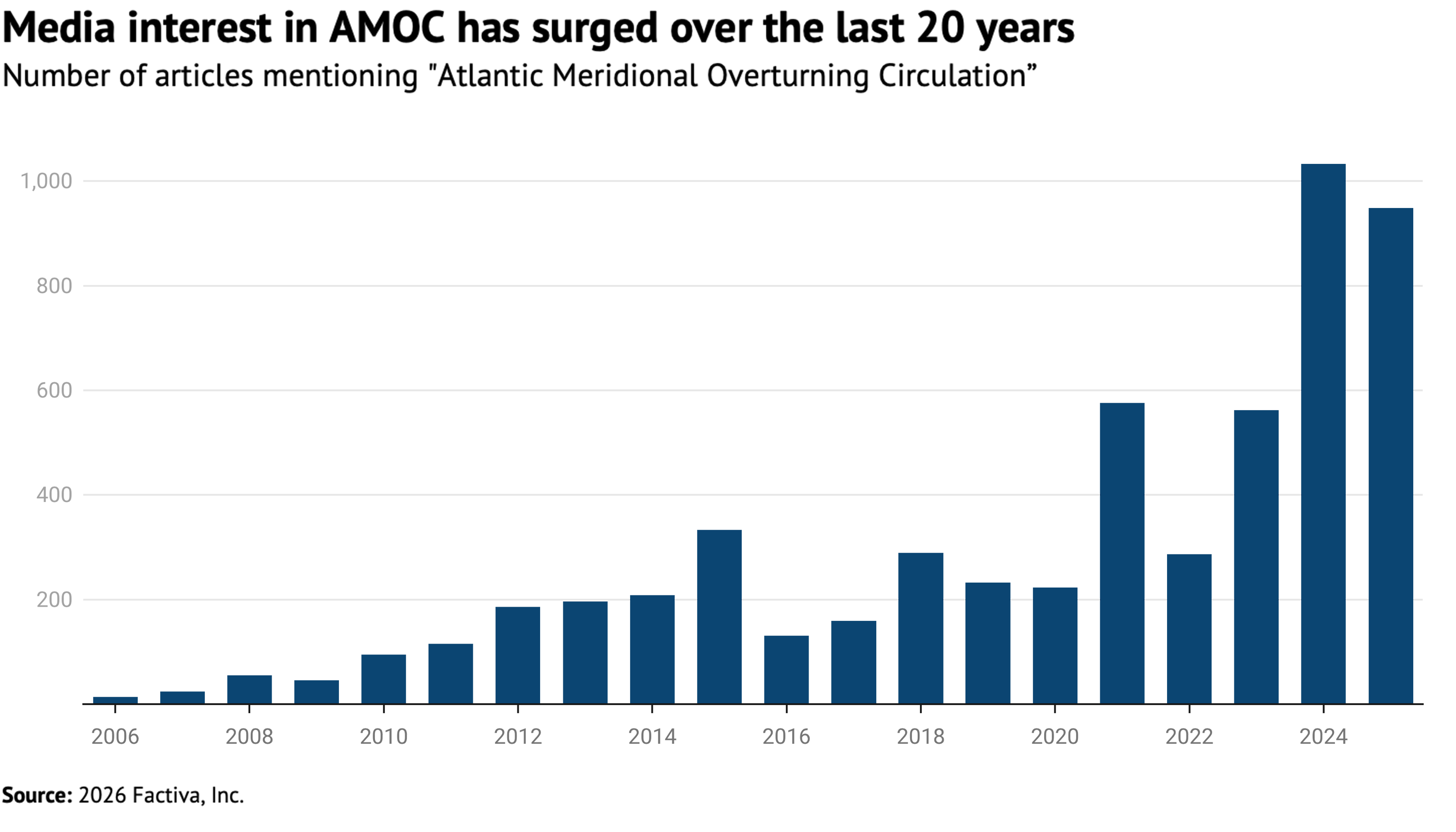
The chart above is designed to give a sense of trends in media coverage. The overall number of articles discussing AMOC is likely far greater. Carbon Brief limited its analysis to references of the full term “Atlantic Meridional Overturning Circulation” and not the AMOC acronym. (This was done to exclude articles related to, among other things, the Alexandria Mineral Oils Company and “alternative methods of compliance” in aviation.)
There is also frequent conflation in the media of AMOC with its component, the Gulf Stream. Articles that only mention the Gulf Stream are not captured in the analysis.
Coverage of AMOC science is often sensationalist in tone, with journalists frequently evoking catastrophic scenarios depicted in the 2004 blockbuster film The Day After Tomorrow. The film depicts the rapid onset of a new ice age after melting sea ice prompts Atlantic circulation patterns to almost instantaneously collapse.
In 2024 and 2025, 195 and 81 articles, respectively, referenced the disaster film in AMOC coverage, according to Factiva. (This averages at roughly 19% and 9% of the total.)
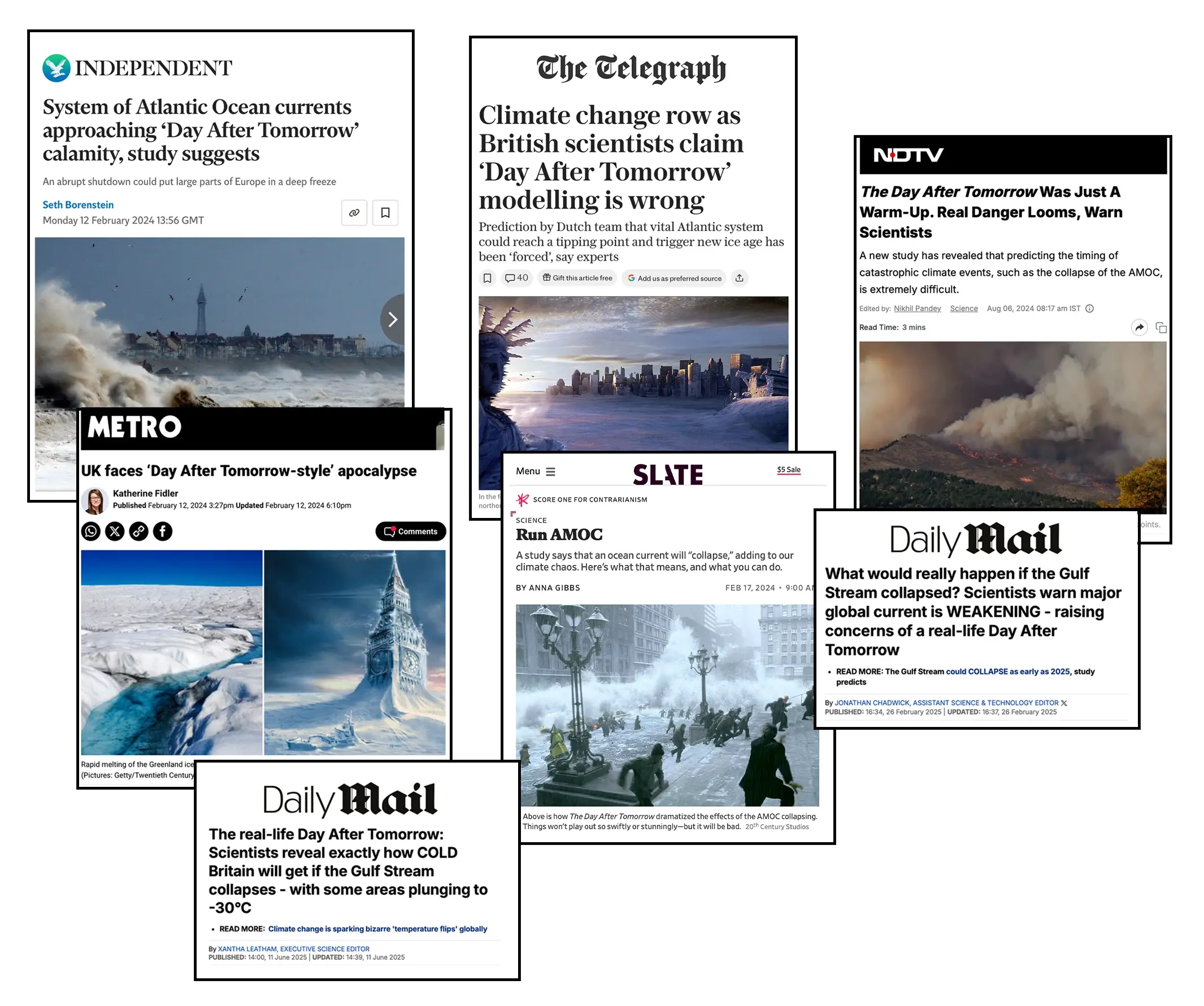
Jackson from the Met Office says the film helps to feed a common “misconception” that AMOC collapse would occur quickly. She tells Carbon Brief:
“I get the impression some people think that [AMOC collapse] is like in The Day After Tomorrow and happens over a few days. Whereas what we are thinking about happens over decades or maybe a century.”
However, there has been a rise in longer-form, explainer articles about AMOC science.
Over the past two years, the Financial Times, New York Times, New Scientist, Vox, Mother Jones, MIT Technology Review, Washington Post and WIRED have dedicated long-reads to explaining the risks and science of AMOC.
At the same time, climate-sceptic outlets, such as the UK’s Daily Telegraph and Daily Mail, have highlighted scientific uncertainties and debates within AMOC research.
PIK’s Rahmstorf says he has noted a “whiplash effect” in the media – where the conclusions of new AMOC studies are presented as definitive. He explains:
“As scientists, we look at a whole suite of studies that exist on one topic…We look at the overall balance of evidence. Whereas the media oscillates back and forth between saying ‘this latest study proves AMOC is weakening’ [or] ‘this latest study shows it’s not weakening after all’. And then, the public, of course, is quite confused.”
He adds the media tends to err towards dramatic conclusions on AMOC:
“There are extremes in both directions. Some media articles really exaggerate [the probability and impacts of AMOC collapse] and then other media articles try to play it down as a risk. Admittedly, it is hard to get the balance right – but there are also political interests behind it as well.”
In February 2024, the AMOC received a bump of coverage after dozens of climate scientists wrote to ministers of Nordic countries to underscore the risks of AMOC collapse and the need for action to cut greenhouse gas emissions. The Guardian, Reuters, Euronews, Daily Mail, Vice News, Gizmodo and Geographical were among the publications to cover the intervention.
Also in 2024, the aforementioned Science Advances study that warned AMOC was on a “tipping course” topped Carbon Brief’s annual list of the most-covered science research of the year.
It remains unclear whether growing coverage of AMOC has focused policymakers’ minds on the question of AMOC collapse.
The topic has been debated three times in UK parliament – in 2006, 2024 and 2025, according to the parliamentary record. It was also the subject of one written question in 2024, to which a minister replied that the government had “not assessed the effect” of any slowing or collapse of the AMOC, but was “monitoring ongoing research”.
In Ireland – another country whose mild climate relies on the AMOC – official records show the issue has been debated twice, in 2024 and 2025. It has also been the subject of one written question.
In November 2025, Iceland’s climate minister Johann Pall Johannsson told Reuters that the country had officially designated the potential collapse of AMOC a national security concern.
Carbon Brief would like to thank all the scientists who helped with the preparation of this article.